Your First Binance Deposit: Bank Transfer, Card or P2P
The three ways money gets into a Binance account, what each really costs, how long each takes, and which one to use for a first deposit.
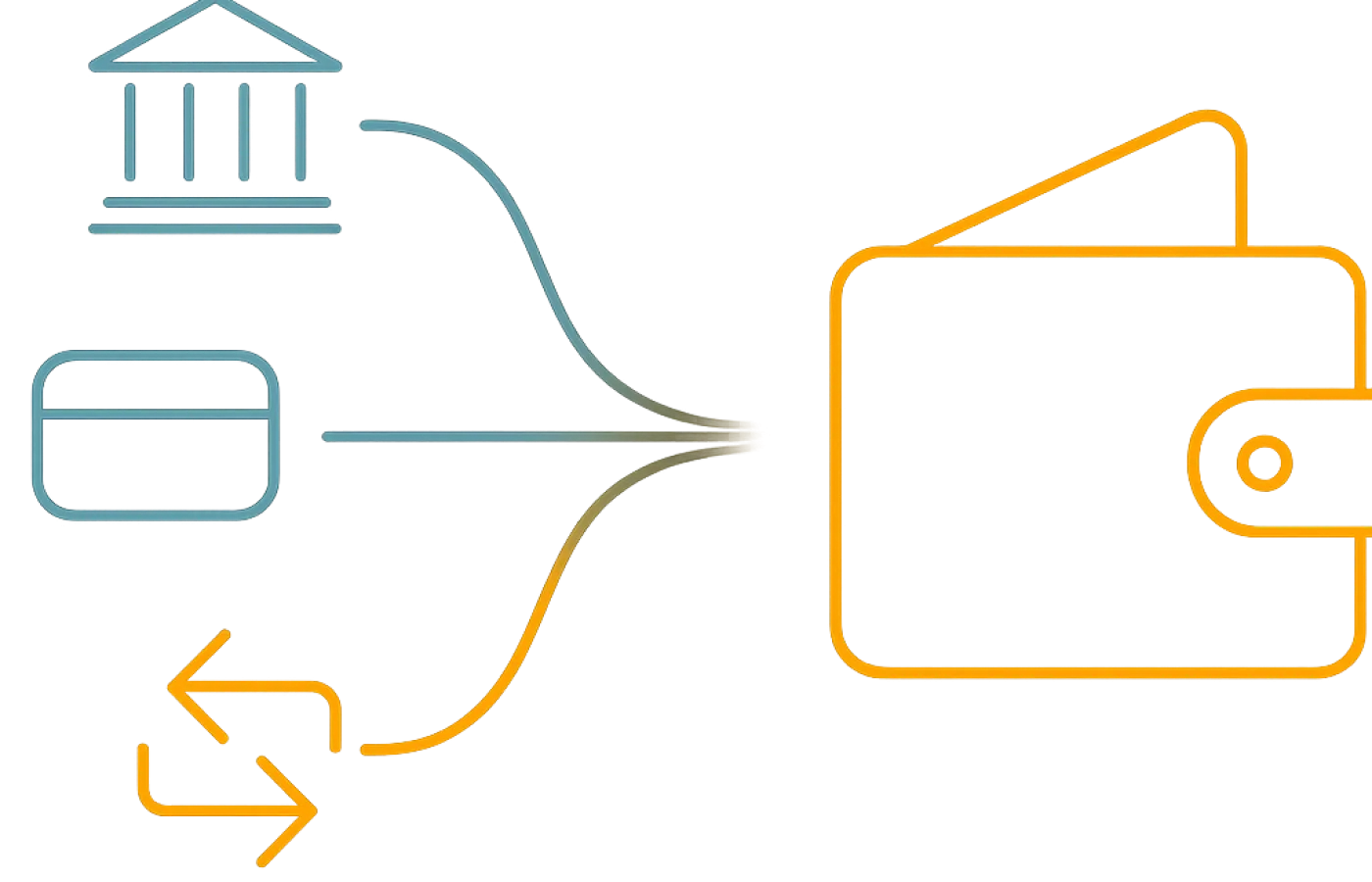
There are three realistic routes for a first deposit, and the cheapest one is almost never the one people pick. Card payments are the default because they are instant and familiar, and they are also the most expensive by a wide margin.
This page compares bank transfer, card and peer-to-peer on cost, speed and risk, and covers the crypto transfer route for anyone arriving with coins already.
The three routes, compared
The right answer depends on your country, your currency and how quickly you need the funds available.
| Method | Typical cost | Speed | Best for |
|---|---|---|---|
| Bank transfer | Free to ~1% | Hours to 2 days | Larger amounts, lowest cost |
| Debit or credit card | ~1.8% to 2%+ | Instant | Small amounts, urgency |
| P2P marketplace | 0% platform fee, spread varies | 5–30 minutes | Local payment methods, no bank rail |
| Crypto transfer | Network fee only | Minutes | Moving from another exchange or wallet |
Costs vary substantially by country and currency. The relative ordering — bank cheapest, card most expensive — holds almost everywhere.
Bank transfer
Where it is supported, this is the cheapest route and the one to default to for anything beyond pocket money.
You transfer your local currency to Binance's banking partner and it credits your fiat wallet, from which you can buy crypto on the spot market at real order-book prices rather than a marked-up conversion rate.
Two things go wrong with bank transfers, and both are avoidable. The first is a name mismatch: the sending account must be in the same name as the verified Binance account, or the transfer is rejected or held. The second is a missing reference code — most deposits require one so the funds can be matched to your account.
- Send from an account in your own name; third-party transfers are rejected.
- Include the reference exactly as shown, with no extra text.
- Check the daily and monthly limits attached to your verification level before sending.
- First transfers are often held longer for review than subsequent ones.
- Weekend and holiday transfers settle on the next banking day, not immediately.
Card payments
Instant, universally available, and by far the most expensive.
The visible processing fee is typically around 1.8% to 2%. On top of that, card purchases usually execute against a quoted conversion price rather than the spot order book, and that quote carries its own margin. Your card issuer may add a cash-advance fee or foreign transaction fee independently.
A $1,000 card purchase can easily cost $25 to $40 all-in. The same $1,000 by bank transfer and then a spot market buy costs about $1 in trading fees, and 85 cents with the referral discount.
The honest use case for cards is a small first deposit to test that the whole path works, or a genuinely urgent purchase. For anything else the difference is not worth it.
Credit card purchases of crypto are treated as cash advances by many issuers, which means interest from day one with no grace period. Check before using one.
P2P
Binance's peer-to-peer marketplace matches you with another user who sells you crypto directly, using a local payment method. Binance holds the seller's crypto in escrow until you confirm payment.
In many countries this is the only practical route, and in several it is the dominant one. There is no platform fee; the cost is embedded in the price the seller offers, which sits slightly above the market rate.
P2P carries counterparty risk that the other methods do not, and the protections work only if you follow the process exactly.
- Filter for merchants with a high completion rate and a large number of completed orders.
- Check the payment methods accepted and the minimum and maximum amounts before opening an order.
- Pay exactly the amount shown, from an account in your own name, within the time window.
- Never mark an order as paid before the money has actually left your account.
- Never release crypto as a seller before the funds are confirmed in your bank — reversible payment methods are the standard scam.
- Keep the dispute inside Binance's chat. Anyone moving the conversation to Telegram or WhatsApp is preparing to defraud you.
Arriving with crypto already
If you hold coins on another exchange or in a wallet, transferring them is usually the cheapest route of all — and the one where a mistake is permanent.
The fee is the network fee, and it varies enormously by chain: the same stablecoin can cost a few cents on one network and twenty dollars on another. Check what the sending platform charges and what Binance supports before choosing.
The rule that matters more than cost: the network must match on both sides. Sending a token on one chain to an address generated for another usually means the funds are unrecoverable. Binance can sometimes recover cross-chain mistakes for a fee, but treat that as luck rather than a plan.
- Copy the deposit address from Binance; never retype it or trust one from a message.
- Select the same network on the sending side that Binance shows for that address.
- Send a small test amount first when the total is significant.
- Check the minimum deposit — amounts below it can be lost rather than credited.
- Expect a confirmation delay proportional to the network, not to Binance.
Where the referral discount fits
It does not apply to deposits at all. This is worth stating clearly because the two costs are easy to conflate.
The referral discount reduces trading fees — the charge when you buy or sell on the order book. Deposit fees, card processing fees, P2P spreads and network fees are untouched by any referral code.
What that means practically: choosing bank transfer over card saves you far more on a first deposit than the referral discount will save you in your first year of trading. Do both, in that order of attention.
A sensible first sequence
For someone starting from nothing, this order minimises both cost and the chance of an expensive mistake.
- Complete identity verification before attempting any deposit — limits and availability depend on it.
- Enable two-factor authentication with an authenticator app.
- Make a small deposit by the cheapest method available in your country, to confirm the path works.
- Buy a small amount on the spot market rather than through the convert or card flow, so you see the real fee.
- Check the fee charged against your expected rate to confirm the referral discount is live.
- Only then deposit the amount you actually intended to invest.
Testing with a small amount costs a few cents in fees and regularly saves people from sending a large transfer to the wrong network.
SAM210826
The code can only be entered while you create the account. It costs you nothing and cannot be added later.
No referral code has been added for this exchange yet.
Get in touch: contactmail.bsam@gmail.com
No referral code has been added for this exchange yet.
Get in touch: contactmail.bsam@gmail.com
No referral code has been added for this exchange yet.
Get in touch: contactmail.bsam@gmail.com
No referral code has been added for this exchange yet.
Get in touch: contactmail.bsam@gmail.com
Questions about this page
What is the cheapest way to deposit money into Binance?
Bank transfer where it is supported, followed by P2P. Card payments are the most expensive by a wide margin once processing fees and the quoted conversion price are included.
Why was my bank transfer rejected?
Most often because the sending account is not in the same name as the verified Binance account, or because the reference code was missing or altered.
Is P2P safe?
It is escrow-protected, but only if you keep everything inside Binance's process. Pay from your own account, never confirm payment early, and never move the conversation to an outside chat app.
Does the referral discount reduce deposit fees?
No. It applies to trading fees only. Deposit costs, card processing, P2P spreads and network fees are unaffected.
What happens if I send crypto on the wrong network?
Usually the funds are unrecoverable. Always match the network on both sides and send a small test amount first when the total matters.
Fee rates on this page were checked on 2026-08-21 against the exchange's official fee schedule. Rates can change without notice.