What Is a Binance Referral Code? The Discount Explained
A Binance referral code is a short string entered at sign-up that permanently lowers your trading fees. Here is what it does, what it costs, and where the money comes from.
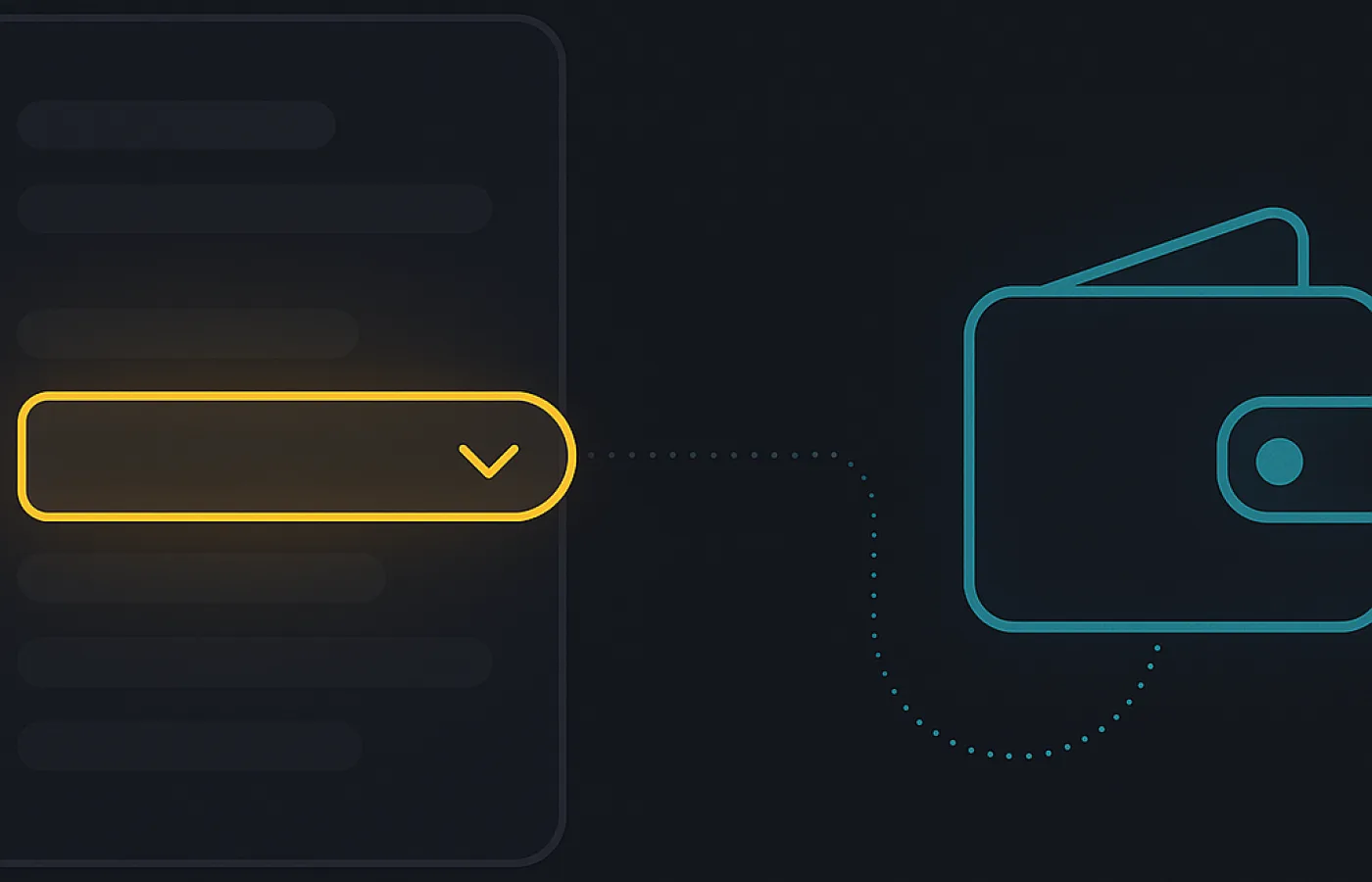
A Binance referral code is a short string — ours is SAM210826 — that you type into one field while creating an account. It does exactly one thing, and it does it permanently: it attaches a fee discount to the account.
That is the whole mechanism. There is no bonus airdrop waiting, no locked deposit, no subscription. What most pages selling you a code will not tell you is where the money actually comes from, why the discount is not charity, and the one hard limit that makes the timing matter.
What the code actually is
Binance runs a referral program: existing users can invite new ones, and Binance shares part of the trading commission the new account generates with whoever invited them. The referral code is the identifier that links the two accounts together.
When you register, one field on the form is labelled "Referral ID (optional)". Whatever you type there is the code. If you arrive through a referral link instead, the field is filled in for you and you can see the code sitting in it before you submit.
The code is not a coupon that expires after a purchase and it is not a promotional campaign that ends next month. It becomes a property of the account and stays attached for the life of that account.
What you get in return
The referral program splits the trading commission Binance already charges into two parts. One part goes to the person who invited you. The other is returned to you as a fee discount — the invitee rate.
| Market | Discount for you (invitee) | Share for the inviter |
|---|---|---|
| Spot | 15% | 5% |
| Futures | 5% | 5% |
These are the rates attached to the code on this site. Different referrers can have different splits, so a code is not automatically worth the same as any other code.
What that means in money
Discount percentages are abstract. The number that matters is the fee you actually pay, so here is the arithmetic on the standard VIP 0 taker rate of 0.1% on spot.
A $1,000 spot trade costs $1.00 in fees without a code. With a 15% invitee discount it costs $0.85. You saved fifteen cents, which sounds trivial — and on one trade it is.
The reason it is worth five minutes of your attention is that trading fees compound with activity, not with time. Someone who buys once a month and holds will never notice the discount. Someone who moves $50,000 a month across positions pays $50 in spot fees at the standard rate and $42.50 with the code — $90 a year on spot alone, before futures.
- $1,000 monthly volume: about $1.80 saved per year on spot.
- $10,000 monthly volume: about $18 saved per year on spot.
- $50,000 monthly volume: about $90 saved per year on spot.
- $250,000 monthly volume: about $450 saved per year on spot.
Does it cost you anything?
No — and this is the part worth understanding properly, because "free" claims on affiliate pages deserve suspicion.
Binance charges every account a trading fee. From that fee, it pays commission to referrers. The invitee discount is carved out of the same pot. An account created with a code pays less than an account created without one; the referrer is not paid on top of your fee, and there is no version of this where you pay a premium for having used a code.
What you are giving up is nothing financial. You are giving the referrer credit for the introduction. That is the entire transaction, and it is why the arrangement is stable: Binance gets a customer it did not pay an ad network for, you get a lower fee, and the referrer gets a cut of commission that would otherwise have stayed with the exchange.
The one rule that catches people out
A referral code can only be applied while the account is being created.
Once you have submitted the registration form, the account either has a referrer attached or it does not, and that state is fixed. Support will not add one afterwards. Deleting the account and starting again with the same identity documents is not a workaround anyone should attempt — Binance treats duplicate accounts as a policy violation.
This is why every guide on this site, including this one, keeps repeating the same instruction: copy the code before you open the registration page, not after.
Referral code, referral ID, invite code: same thing?
Mostly, yes. Binance and its users have used several names for the same field over the years, and search results mix them freely.
- Referral code — the common name, and what the field is usually labelled.
- Referral ID — what the account settings screen calls it once you have one of your own.
- Invite code — used interchangeably, especially in app screenshots.
- Referral link — a URL with the code embedded, so the field is pre-filled for you.
- Affiliate code — technically different: affiliates are a separate, application-only tier of the same program with negotiated rates.
If a page offers you a "bonus code" promising a fixed cash reward for signing up, read the conditions carefully. Those are usually campaign-specific, region-limited and time-limited; a fee discount is not.
How to check the code was applied
After registering, you can confirm the link exists rather than taking anyone's word for it.
Open the account settings and look for the referral or account information section. An account with a referrer shows the referring ID; an account without one shows the field empty. The fee schedule page in your account will also show your effective rate, which is where the discount becomes visible on real trades.
If the field is empty and you believed you entered a code, the most common causes are covered in the guide on codes that will not apply — usually a browser autofill wiping the field, or a registration started in one tab and completed in another.
Who this is genuinely useful for
Being honest about the size of the benefit matters more than overselling it.
If you plan to buy a small amount of crypto once and hold it for years, the referral code will save you a rounding error. Use it anyway — it costs nothing — but do not reorganise your day around it.
If you trade regularly, use futures, or run any strategy that opens and closes positions frequently, fees are one of your largest controllable costs, and a permanent 15% reduction on the spot side is worth having from day one. It cannot be added later, so the decision is made once, at registration, or not at all.
SAM210826
The code can only be entered while you create the account. It costs you nothing and cannot be added later.
No referral code has been added for this exchange yet.
Get in touch: contactmail.bsam@gmail.com
No referral code has been added for this exchange yet.
Get in touch: contactmail.bsam@gmail.com
No referral code has been added for this exchange yet.
Get in touch: contactmail.bsam@gmail.com
No referral code has been added for this exchange yet.
Get in touch: contactmail.bsam@gmail.com
Questions about this page
Is a Binance referral code the same as a promo code?
No. A promo code is usually a time-limited campaign with its own conditions and often a fixed reward. A referral code attaches a permanent trading fee discount to the account and does not expire.
Can I use a referral code on an existing Binance account?
No. The referral link is fixed when the account is created. Support does not attach one afterwards, and creating a second account to get around it breaks Binance's one-account rule.
Do I pay more because someone earns commission from my trades?
No. The commission comes out of the fee Binance already charges. An account with a referral code pays a lower fee than an account without one.
How long does the discount last?
For as long as the account exists. It is not a trial period and does not need renewing.
Are all referral codes worth the same discount?
No. Referrers can have different commission splits, so the invitee discount varies. The code on this site gives 15% off spot fees and 5% off futures fees.
Fee rates on this page were checked on 2026-08-21 against the exchange's official fee schedule. Rates can change without notice.